
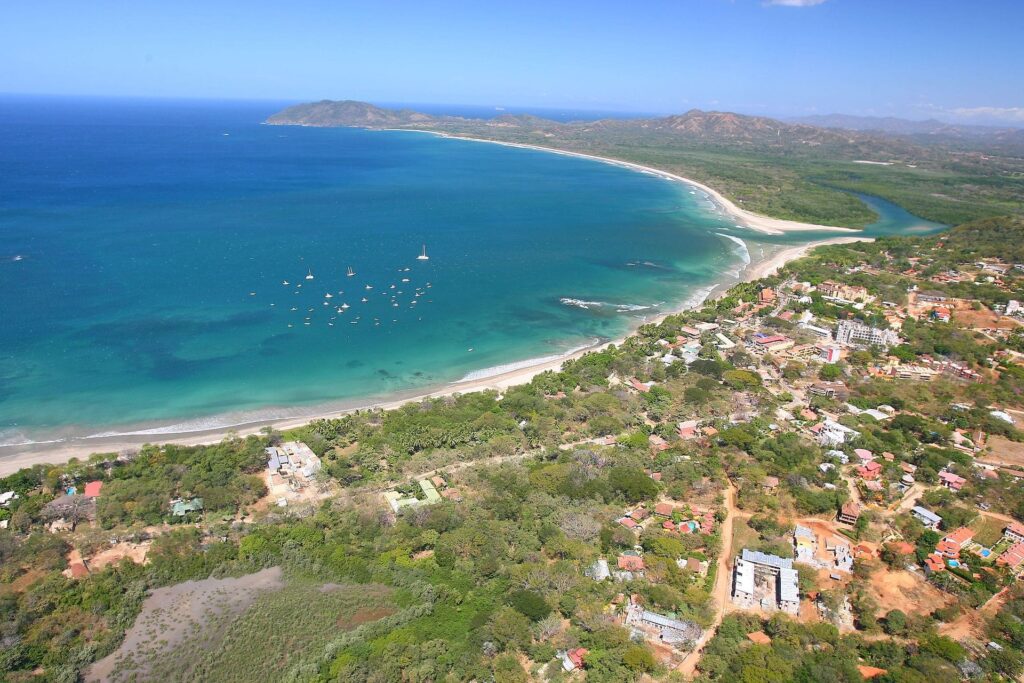
Tamarindo is the kind of place that gets under your skin.
It starts as a beach town — sun, surf, a main street with good food and cold beer. But the longer you stay, the more layers you find. Mangrove estuaries full of crocodiles and howler monkeys. World-class fishing 20 minutes offshore. Sunsets that stop conversations mid-sentence. A coastline thats part of Marino Las Baulas National Park that stretches north and south with beaches most visitors never find.
This guide covers everything you need to plan a trip to Tamarindo, Costa Rica — whether it’s your first visit or your fifth.
Where Is Tamarindo?
Tamarindo is a beach town on the Pacific coast of Guanacaste province, in northwestern Costa Rica. It sits roughly halfway along the Nicoya Peninsula coastline, surrounded by protected beaches, wildlife reserves, and some of the most consistent surf breaks in Central America.
The nearest international airport is Liberia (LIR), about 80 kilometers north — roughly 90 minutes by road. San José (SJO) is a longer drive, approximately 4.5 to 5 hours depending on traffic and road conditions.
Despite its relatively remote location, Tamarindo has excellent infrastructure for travelers: reliable internet, good medical facilities, ATMs, international restaurants, and a wide range of accommodation. It manages to feel laid-back without feeling underdeveloped.
When Is the Best Time to Visit Tamarindo?
Guanacaste has two distinct seasons, and both have genuine advantages, take note that the weather season will vary depending of the destinations you are visiting while on your tour to Costa Rica.
Dry Season: December – April
This is peak season. Days are reliably sunny, humidity is lower, and the ocean is at its calmest. Conditions are ideal for offshore fishing, scuba diving, sailing, and any water activity that benefits from smooth seas and good visibility.
The tradeoff: this is also when Tamarindo is at its busiest and most expensive. Hotels fill up fast, especially around Christmas, New Year’s, and Semana Santa (Holy Week, usually in April). If you’re visiting during dry season, book accommodation and tours well in advance.
Best for: Sport fishing, scuba diving, sailing, families with young children, first-time visitors.
Green Season: May – November
Green season is misunderstood. Yes, it rains — but typically in focused afternoon showers rather than all-day downpours. Mornings are usually clear, and the landscape transforms from the dry brown of the dry season into something genuinely lush and dramatic.
Crowds thin out significantly. Prices drop — sometimes by 30 to 40 percent on accommodation. The surf improves as larger Pacific swells arrive. Wildlife is more active. And there’s something about having a beach almost to yourself that no amount of sunshine during peak season can replicate.
Best for: Surfers, budget travelers, photographers, couples who don’t want crowds, repeat visitors.
Month-by-Month Highlights
December – February: Peak dry season. Best fishing and diving. Leatherback turtles nesting at Playa Grande. Busiest and most expensive.
March – April: Still dry but getting hotter. Semana Santa brings large domestic tourism crowds.
May – June: First rains arrive. Prices drop. Surf begins to improve.
July – August: Brief dry spell within green season (the veranillo). Good conditions with fewer crowds. Whale watching season begins.
September – October: Wettest months. Quietest time of year. Best deals. Surf is at its most consistent.
November: Transition month. Rain decreasing. Turtle season picking up at Playa Grande.
How to Get to Tamarindo
By Air — The Fastest Option
International: Fly into Liberia (LIR), served by major US carriers including American, United, Delta, Southwest, and JetBlue. Direct flights from many US cities make this the most convenient entry point for North American travelers.
Domestic: Sansa Airlines operates small-aircraft flights from San José (SJO) directly to Tamarindo’s local airstrip. The flight takes about 45 minutes and is a worthwhile upgrade if you’re continuing from San José.
By Car from Liberia Airport
Renting a car at Liberia airport is the most flexible option. The drive to Tamarindo takes approximately 80–90 minutes on paved roads. A 4×4 is not strictly necessary during dry season but is recommended during green season when some side roads flood.
By Shuttle from Liberia or San José
Shared shuttles run daily from Liberia airport and San José to Tamarindo. They’re cost-effective and comfortable — the main downside is fixed departure times and occasional stops along the route.
If you landed on San Jose we recommend you to take some stops on your way there, Costa Rica biodiversity will astounish you as you might pass by key tourist spots like La Fortuna Book in advance during peak season.
Getting Around Tamarindo
The town center is walkable. Most hotels, restaurants, the main beach, and the surf breaks are within a 10–15 minute walk of each other.
For exploring beyond town — visiting neighboring beaches, reaching the estuary, or getting to Flamingo Marina for fishing and sailing charters — you have a few options:
Rental car: The most flexible choice. A 4×4 is recommended year-round on the dirt roads that connect Tamarindo to nearby beaches.
Scooter or ATV rental: Popular for day trips to Playa Langosta, Playa Avellanas, and Playa Negra. Affordable and practical for solo travelers or couples.
Taxis: Readily available in town. Agree on a price before getting in — meters are not universal here.
Rideshare apps: Uber and InDrive operate in the area with varying reliability. Having both apps downloaded is useful.
Where to Stay in Tamarindo
Tamarindo has accommodation across every price range, from budget surf hostels to boutique hotels with private pools.
Budget (Under $80/night)
Tamarindo has several solid hostels and guesthouses near the main beach. Look for options with private rooms rather than dorms if you want a good night’s sleep — the town has an active nightlife that carries late.
Mid-Range ($80–200/night)
The sweet spot for most travelers. Boutique hotels in this range typically include pools, breakfast, and are within walking distance of the beach. Booking 2–3 months ahead for dry season is wise.
Luxury ($200+/night)
A small number of high-end properties sit on or near the beach with the full suite of amenities. For a truly elevated stay, some travelers base themselves in nearby Playa Flamingo or Playa Conchal, both about 30–40 minutes north, and day-trip into Tamarindo.
General tip: Properties with direct beach access or ocean views command a significant premium. Decide early whether the view is worth the cost — the beach itself is a short walk from almost anywhere in town.
Where to Eat and Drink in Tamarindo
Tamarindo punches well above its size when it comes to food.
Breakfast and Coffee
The town wakes up slowly and takes its morning coffee seriously. Several good café-bakeries serve proper espresso drinks alongside fresh pastries, fruit bowls, and gallo pinto. Mornings at an outdoor table facing the street — watching surfers walk past with boards — is one of the more pleasant ways to start a day.
Seafood
This is where Tamarindo genuinely excels. Fresh catch from the local fishing boats arrives daily, and the best ceviches, fish tacos, and grilled whole fish in town come from places that look nothing like restaurants — open-air counters, plastic tables, handwritten menus. Ask locals where they eat fish. The answer will not be the establishment with the loudest sign on the main street.
International Dining
The expat and tourist population has produced a food scene with more range than most small beach towns. Italian, Japanese, Mexican, Mediterranean, and fusion options all exist at various quality levels. The higher-end restaurants are genuinely good — competitive with what you’d find in a major city.
Nightlife
Tamarindo has an active nightlife scene concentrated around a few bars near the beach. It’s lively but not overwhelming — more “beach town Friday night” than “party destination.” Things wind down by 2:00 AM most nights, earlier on weekdays.
What to Do in Tamarindo
The activities available in and around Tamarindo are one of the main reasons people return. The short version: there’s more tours and things to do in Tamarindo than most travelers realize before they arrive.
On the Water
Sport Fishing is the signature activity of the Guanacaste coast. Sailfish, marlin, mahi-mahi, and yellowfin tuna are all in range. Charters depart from Flamingo Marina, about 30 minutes north.
Sailing and Catamaran Tours range from shared sunset cruises to fully private luxury charters with gourmet dining and premium open bars. The private options, particularly on a 61-foot sailing catamaran operated out of Flamingo, are genuinely world-class experiences.
Scuba Diving around the rocky reefs and offshore pinnacles of Guanacaste rewards both beginners and certified divers with sea turtles, reef sharks, eagle rays, and exceptional biodiversity.
Surfing is the reason many people come to Tamarindo in the first place. The main beach break is ideal for learning. More advanced breaks are accessible nearby — Witch’s Rock and Ollie’s Point require a boat but deliver some of the best surf in Costa Rica.
Kayaking the Tamarindo Estuary is the most underrated activity in the area — a guided paddle through a wildlife-rich mangrove system that feels completely removed from the beach scene 500 meters away.
On Land
Playa Grande and the Leatherback Turtles: A short boat ride across the estuary, Playa Grande hosts one of the world’s most important leatherback sea turtle nesting sites. Night tours run October through March.
Day Trip to Rincón de la Vieja: Two hours inland, this active volcanic national park offers hiking, hot springs, mud pots, and waterfalls in a dramatically different landscape.
Exploring Nearby Beaches: Playa Langosta, Playa Avellanas, Playa Negra, and Playa Conchal are each within 30–45 minutes and each worth a half-day visit. Rent a car or scooter and work your way down the coast.
The Saturday Farmers Market: A genuinely good market with local produce, prepared food, artisan goods, and a social atmosphere. Worth building your Saturday morning around.
Practical Information
Currency and Payments
Costa Rica’s currency is the colón, but US dollars are widely accepted in Tamarindo. Most hotels, restaurants, and tour operators accept credit cards, though some smaller establishments are cash-only. ATMs are available in town but can run out of cash during peak season — arrive with some dollars as backup.
Language
Spanish is the official language, but English is widely spoken in Tamarindo’s tourist areas. Learning a few phrases in Spanish is appreciated and goes a long way with locals.
Safety
Tamarindo is considered safe for tourists by Costa Rican standards. Standard precautions apply: don’t leave valuables on the beach or visible in a parked car, be aware of your surroundings at night, and use hotel safes. The ocean deserves more respect than many visitors give it — rip currents exist, and the surf can be powerful.
Internet and Connectivity
WiFi is reliable in most hotels, restaurants, and cafés. Local SIM cards from Kolbi, Claro, or Movistar are cheap and give you solid coverage throughout Guanacaste. Buying a SIM at the Liberia airport on arrival is the most convenient option.
Health
No vaccinations are specifically required for Costa Rica, though standard travel health precautions apply. Pharmacies in Tamarindo are stocked and well-run. The nearest hospital is in Liberia. Travel insurance that covers medical evacuation is recommended.
Tipping
A 10% service charge is automatically added to restaurant bills in Costa Rica. Additional tipping is appreciated but not obligatory. For tours and guides, 10–15% is standard for good service.
How Many Days Do You Need in Tamarindo?
3 days: Enough to get a feel for the town, spend proper time on the beach, do one or two tours, and eat well. You’ll leave wishing you had more time.
5–7 days: The sweet spot for most travelers. You can do the tours you actually want to do, take a day trip or two, explore neighboring beaches, and settle into the pace of the place.
10+ days: What happens when people plan for a week and then extend their stay. Tamarindo has a way of doing this.
Final Thoughts
Tamarindo is not a destination you exhaust. The combination of Pacific coastline, offshore waters, wildlife, and the particular energy of a surf town that takes itself seriously without taking itself too seriously keeps drawing people back.
Plan what you want to do before you arrive — the best tours and boats book up, especially in high season.
If you’re planning your trip, you can explore our best tamarindo tours, where we break down the best experiences available.
For a full overview of activities, check our detailed things to do in Tamarindo Costa Rica guide, you are still not sure about giving Tamarindo a try, you might be interested to know if, is Tamarindo really worth it?
We’ve also created a visual breakdown of these experiences in our Tamarindo tours presentation, along with a structured list of tours and categories in our Tamarindo tours data sheet.
Plan Your Tamarindo Tours
Costa Rica Local Tours is based in Tamarindo and can help you put together the right itinerary for your trip — whether that’s a single fishing charter or a full week of activities on the Guanacaste coast.
Contact us via WhatsApp — we’ll help you make the most of your time here.
Costa Rica Local Tours — Tamarindo, Guanacaste