
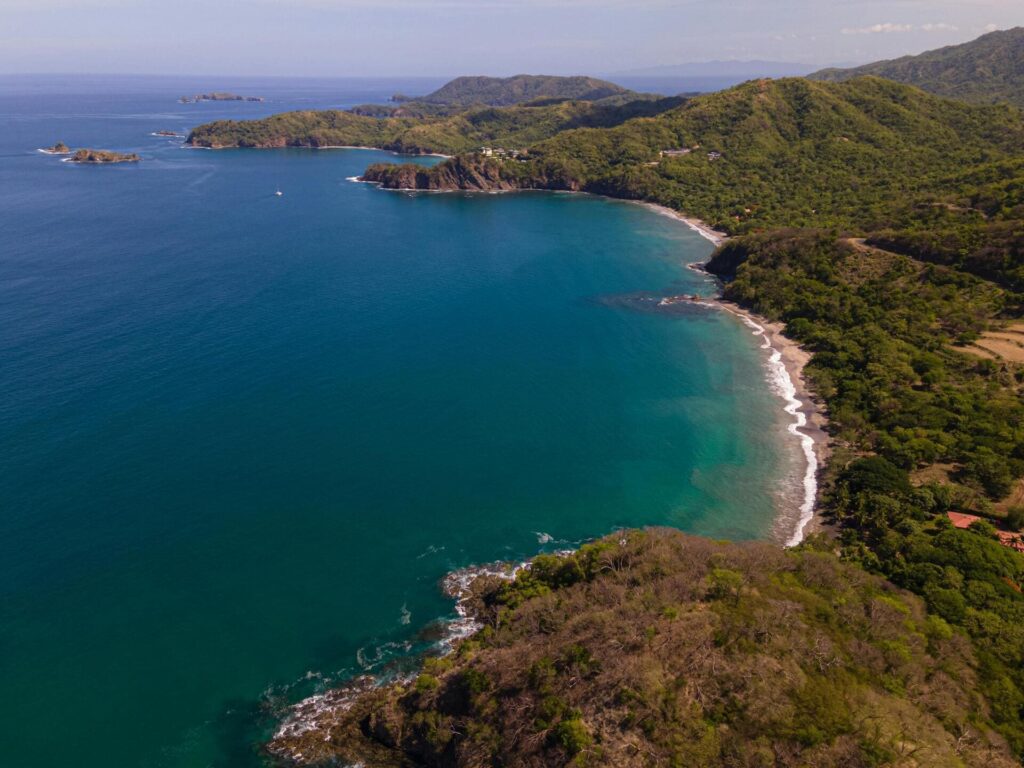
Guanacaste is where most people’s idea of Costa Rica actually lives.
The northwest Pacific province stretches from the Nicaraguan border south along one of the most spectacular coastlines in Central America — a succession of protected beaches, surf breaks, wildlife refuges, and small towns connected by roads that wind through dry tropical forest and volcanic highlands. The province is home to Tamarindo, Playa Flamingo, Playa Conchal, Nosara, Sámara, and dozens of beaches that don’t appear on most maps.
If you’re planning a trip to Costa Rica and want sun, surf, warm water, and wildlife, you’re planning a trip to Guanacaste.
Where Is Guanacaste?
Guanacaste is Costa Rica’s northwesternmost province, bordered by Nicaragua to the north, the Pacific Ocean to the west, and the Cordillera de Guanacaste mountain range to the east. It covers roughly 10,000 square kilometers and contains more coastline than any other province in the country.
The provincial capital is Liberia, home to the Daniel Oduber Quirós International Airport (LIR) — the primary entry point for international travelers visiting the Pacific coast. Most of Guanacaste’s beach destinations are 60–120 minutes from Liberia by road.
Geographically, the province divides naturally into three zones: the northern beaches (Papagayo, Hermosa, Panamá), the central beaches (Flamingo, Conchal, Tamarindo, Langosta), and the southern Nicoya Peninsula (Nosara, Sámara, Carrillo). Each has a distinct character.
Why Guanacaste?
Costa Rica has two coasts. The Caribbean side — lush, rainy, culturally distinct — is spectacular in its own right. But for most international visitors, Guanacaste and the Pacific coast is the destination.
The reasons are practical as much as aesthetic. Guanacaste has the most reliable dry season in Costa Rica, with December through April offering consistent sunshine that the Caribbean and Central Pacific can’t match. The international airport at Liberia eliminates the need to transit through San José. The concentration of beaches, national parks, and water-based activities within a relatively compact area means you can cover a lot without spending your vacation in a car.
And then there’s the Pacific itself — warm, dramatic, endlessly variable, and home to a marine ecosystem that rewards anyone who gets in the water.
Getting to Guanacaste
By Air
Liberia (LIR) is the gateway. Direct international flights arrive from major US cities including Miami, Houston, Dallas, New York, Atlanta, Los Angeles, and Toronto, operated by American, United, Delta, Southwest, JetBlue, and Air Canada among others. Flight times from the US East Coast are approximately 4–5 hours.
Flying into Liberia instead of San José saves 4–5 hours of overland travel and is strongly recommended for anyone whose primary destination is the Pacific coast.
Domestic connections: Sansa Airlines operates small-aircraft flights from San José to several Guanacaste airstrips including Tamarindo, Nosara, and Sámara. These 40–60 minute flights are a significant upgrade over the drive and worth considering if you’re continuing from San José.
By Car from Liberia
Renting a car at Liberia airport is the most flexible way to explore Guanacaste. The highway from Liberia to the coast is paved and well-signed. Distances to major beach destinations from Liberia:
- Playa Hermosa / Papagayo: 30–40 minutes
- Playa Flamingo / Conchal: 60–75 minutes
- Tamarindo: 75–90 minutes
- Nosara: 2.5–3 hours (partly unpaved)
- Sámara: 2.5 hours
A standard sedan handles most Guanacaste roads during dry season. A 4×4 is strongly recommended for green season travel and for reaching more remote beaches year-round.
Guanacaste’s Best Beaches
The province has more beaches than most travelers will ever visit. These are the ones worth knowing about.
Tamarindo
The most visited beach town in Guanacaste, nestled in the middle of Marino Las Baulas National Park. Tamarindo combines a world-class surf break with a proper town infrastructure — good restaurants, active nightlife, surf schools, and easy access to fishing and diving charters. It’s the most accessible introduction to the Guanacaste coast and the best base for exploring the surrounding area.
The beach is long, sandy, and backed by the estuary wildlife reserve that gives the town its natural boundary to the south. Sunsets here are reliably extraordinary.
Playa Flamingo
About 30 minutes north of Tamarindo, Flamingo is quieter, more upscale, and home to one of the best marinas on the coast. The beach itself — white sand, calm water, dramatic headland backdrop — is among the most beautiful in Guanacaste. Flamingo Marina is the departure point for most offshore fishing charters and luxury sailing experiences in the region.
Playa Conchal
Just south of Flamingo, Conchal is named for the billions of small shells that compose its shoreline — giving the sand an unusual texture and color that ranges from white to pale pink. The water is exceptionally clear and calm, making it one of the best beaches for swimming in the province. A large resort anchors one end of the beach; the rest is accessible to anyone who makes the short walk from the road.
Playa Grande
Across the Tamarindo Estuary by boat, Playa Grande is protected as part of Las Baulas National Marine Park — one of the most important leatherback sea turtle nesting sites in the world. The beach is wild, long, and relatively undeveloped. Surf here is powerful and consistent, drawing experienced surfers who want to avoid the crowds at Tamarindo. Night turtle tours run October through March.
Nosara
A different kind of Guanacaste. Nosara — specifically Playa Guiones — has become one of the world’s best-known yoga and wellness destinations without losing its surf-town soul. The beach is spectacular: long, wide, and backed by a protected biological reserve that keeps development at a distance. Getting there requires navigating unpaved roads, which effectively filters the crowd to people who made a deliberate choice to be there. That’s part of the point.
Sámara
The most family-friendly beach in Guanacaste. A barrier reef protects the bay, keeping the water calm and safe for swimming year-round. The town is genuinely charming — smaller and less developed than Tamarindo, with good restaurants, a relaxed pace, and a local community that gives it more character than many resort beaches.
Playa Hermosa (Guanacaste)
Not to be confused with Playa Hermosa near Jacó on the Central Pacific — this Hermosa sits close to the Papagayo Peninsula north of Liberia. A consistent beach break makes it a favorite among intermediate and advanced surfers. The beach is relatively uncrowded and backed by a small community of low-key accommodation and restaurants.
Papagayo Peninsula
Home to Guanacaste’s most concentrated luxury resort development — Four Seasons, Andaz, and several other high-end properties anchor a series of protected coves with calm, clear water. The infrastructure is excellent and the setting is dramatic. It’s a different experience from the independent beach towns further south, designed primarily for guests who want resort amenities alongside the Pacific.
National Parks and Wildlife in Guanacaste
The province takes conservation seriously, and its protected areas are among the most ecologically significant in Central America.
Rincón de la Vieja National Park
An active volcanic complex about 2 hours from Tamarindo. The park encompasses multiple volcanic craters, boiling mud pots, hot springs, fumaroles, and waterfalls in a landscape that shifts from dry forest at lower elevations to cloud forest on the upper slopes. Day tours from the coast are popular and worthwhile — the contrast between the volcanic highlands and the Pacific coastline is remarkable.
Santa Rosa National Park
One of the oldest protected areas in Costa Rica, Santa Rosa encompasses dry tropical forest, important archaeological sites from the Battle of Santa Rosa (1856), and Playa Naranjo — a remote beach accessible only by 4×4 or boat that hosts both olive ridley turtle nesting and exceptional surf at Witch’s Rock and Ollie’s Point.
Las Baulas National Marine Park
Protects Playa Grande and the offshore waters around Tamarindo. The park’s primary purpose is protecting the critically endangered leatherback sea turtle and its nesting habitat. Guided night tours during nesting season (October–March) are one of the most powerful wildlife experiences in Costa Rica.
Palo Verde National Park
An inland park in the Tempisque River basin, Palo Verde protects the most important wetland in Costa Rica — a mosaic of tropical dry forest, seasonal lagoons, and riparian habitat that supports an extraordinary density of waterbirds. Boat tours on the Tempisque River offer close encounters with crocodiles, caimans, and hundreds of bird species.
Water Activities in Guanacaste
The Pacific coast of Guanacaste offers some of the best water-based activities in Central America, concentrated within a relatively compact area.
Sport Fishing
Guanacaste’s offshore waters are among the most productive sportfishing grounds in the Pacific. Sailfish, blue and black marlin, mahi-mahi, yellowfin tuna, wahoo, and roosterfish are all in range depending on the season. Flamingo Marina is the main hub for offshore charters, with boats ranging from modest panga operations to fully equipped sport fishers with experienced professional captains.
Peak season for billfish is December through April, though the fishing is productive year-round. A full-day offshore charter is one of the signature experiences of the Guanacaste coast.
Sailing and Catamaran Charters
Private sailing charters along the Guanacaste coastline offer a completely different perspective on the province — unhurried, beautiful, and suited to groups who want a full day on the water with proper food and drinks. The most elevated option available is a fully private charter aboard a 61-foot luxury catamaran with gourmet cuisine, premium open bar, snorkeling, and a licensed crew. Departures from Flamingo Beach.
Shared sunset sailing tours from Tamarindo are a more accessible option for smaller groups or solo travelers who want an evening on the water without a full private charter commitment.
Scuba Diving
The rocky reefs and offshore pinnacles of Guanacaste host a marine ecosystem that consistently surprises divers accustomed to Caribbean or Southeast Asian diving. Sea turtles are common year-round. Reef sharks, moray eels, eagle rays, octopus, and dense populations of tropical fish fill the reef structures. Larger pelagic visitors — including whale sharks during productive seasons — are possible at offshore sites.
Visibility peaks during dry season but diving is excellent year-round. Both certified and non-certified (discovery dive) options are available.
Surfing
Guanacaste is one of the world’s premier surfing destinations, with breaks suited to every level from beginner to professional.
Tamarindo Beach is ideal for beginners — long, forgiving waves and warm water make it one of the best learn-to-surf environments anywhere.
Witch’s Rock (Roca Bruja) and Ollie’s Point, both within Santa Rosa National Park and accessible only by boat, are world-famous breaks that produce powerful, consistent reef waves for experienced surfers. The remoteness and access restrictions keep crowds manageable even when conditions are perfect.
Nosara (Playa Guiones) offers a long beach break that works at most tide and swell conditions — a reliable option for intermediate surfers.
Snorkeling and Kayaking
Guided snorkeling excursions from Tamarindo access rocky reef environments with high marine biodiversity — typically combined with sailing or catamaran tours. The estuary kayaking experience near Tamarindo is more wildlife than water sport: a guided paddle through a protected mangrove system full of crocodiles, howler monkeys, and tropical birds.
Where to Base Yourself in Guanacaste
The right base depends entirely on what you want from the trip.
Tamarindo is the best all-around base. The town has excellent infrastructure, the widest range of tours and activities, the most dining options, and easy access to neighboring beaches. It’s the right choice for first-time visitors and anyone who wants a full menu of options within walking distance.
Playa Flamingo suits travelers who want a quieter, more upscale experience with easy access to the marina for fishing and sailing. Less nightlife, better beaches, similar access to tours.
Nosara is for travelers who specifically want the yoga-retreat, wellness-focused, deliberately remote experience. Beautiful and worth the drive — but commit to staying several nights to make the journey worthwhile.
Sámara is the right choice for families with young children or anyone who prioritizes calm water and a genuinely relaxed pace over activity variety.
Papagayo Peninsula is for travelers who want full resort amenities and don’t mind paying for them. The best option if luxury infrastructure is the priority.
Practical Tips for Guanacaste
Car rental is almost essential. Public transportation exists but is slow and doesn’t reach most beach destinations efficiently. Renting at Liberia airport and returning there gives you maximum flexibility.
Carry cash. Credit cards are accepted widely, but smaller restaurants, tour operators, and markets often prefer cash. ATMs exist in most towns but can run out during peak season.
The roads are better than they used to be. Guanacaste’s main coastal roads are increasingly paved and well-maintained. A few remote beaches still require 4×4, but most destinations on this guide are accessible in a standard sedan during dry season.
Learn a few words of Spanish. English is spoken at most tourist businesses, but even basic Spanish — por favor, gracias, cuánto cuesta — changes the quality of interaction with local people significantly.
Respect the ocean. The Pacific is powerful. Rip currents exist at most exposed beaches. Swim at beaches with lifeguards when possible, understand basic rip current protocol, and when in doubt, stay closer to shore than you think you need to.
Mosquitoes are real in green season. A quality repellent — DEET-based or picaridin — is worth packing. Malaria risk in Guanacaste is very low, but dengue occurs and prevention is easy.
How Much Time Do You Need in Guanacaste?
5–7 days is enough to properly experience one base town, do the main activities, take a day trip into the interior, and visit a couple of neighboring beaches. This is the minimum for feeling like you’ve actually been somewhere rather than just passed through.
10–14 days allows you to explore multiple bases — a few days in Tamarindo, time in Flamingo or Conchal, perhaps a night in Nosara or Sámara — and do justice to both the coast and the inland parks.
3 weeks or more is when Guanacaste starts to reveal its slower rhythms. The beaches that are a 45-minute drive that you kept meaning to visit. The fishing town whose Saturday market you finally make it to. The morning where you have nowhere to be and the Pacific is completely flat and gold.
Plan Your Guanacaste Trip
Costa Rica Local Tours is based in Tamarindo and works with the best operators along the Guanacaste coast. Whether you’re planning a full itinerary or looking for a single exceptional experience, we’ll help you find the right fit.
Contact us via WhatsApp — we know this coast well and are happy to help.
Costa Rica Local Tours — Tamarindo, Guanacaste